

The National Rail in the UK is a smart choice for business travel in the UK because it easily connects England, Scotland and Wales. In a geographical area that is quite compact and easy to get around, traveling by train for business travelers proves to be a convenient, speedy and sustainable way to travel for business.
We’ll look at the National Rail in more detail, some tips for planning your journey, some essential services for business travelers, top train routes, some productivity and cost-saving tips, and more. So keep reading to get the insider’s look to the UK’s National Rail.
What is the National Rail?
The National Rail is a group representing train companies operating in the United Kingdom across England, Scotland and Wales. However, Northern Ireland, which is a part of the UK, has its own system.
Tips for planning your journey with National Rail
Work with the right technology to book your trip
Booking tickets efficiently for business travel starts with having the right technology. This could be a travel app or a corporate travel and expense management solution that has built-in negotiated rates.
Don’t have a T&E management tool yet? Book a demo to find out what GetGoing can do for you.
Consider traveling off-peak hours to save money
Peak fare:
Peak fare is during the busiest travel times:
- Weekday mornings
- Weekdays after work when commuters are going home
- 6:30-9:30 am and 16:00-19:00
- These times are in high demand, meaning higher prices
When you must travel peak: if you have fixed meeting times and need to travel early or later in the day.
Off-peak fare:
- Outside the busiest hours (usually after (9:30 am and before the evening rush)
- It’s cheaper due to lower demand and discounted fares
- Who can benefit: Flexible travelers who can avoid rush hours.

Pro tip
If your schedule allows, book Off-Peak hours can save your company money and make your journey less crowded and stressful. If you travel frequently, consider flexible tickets or season passes.
Seat reservations
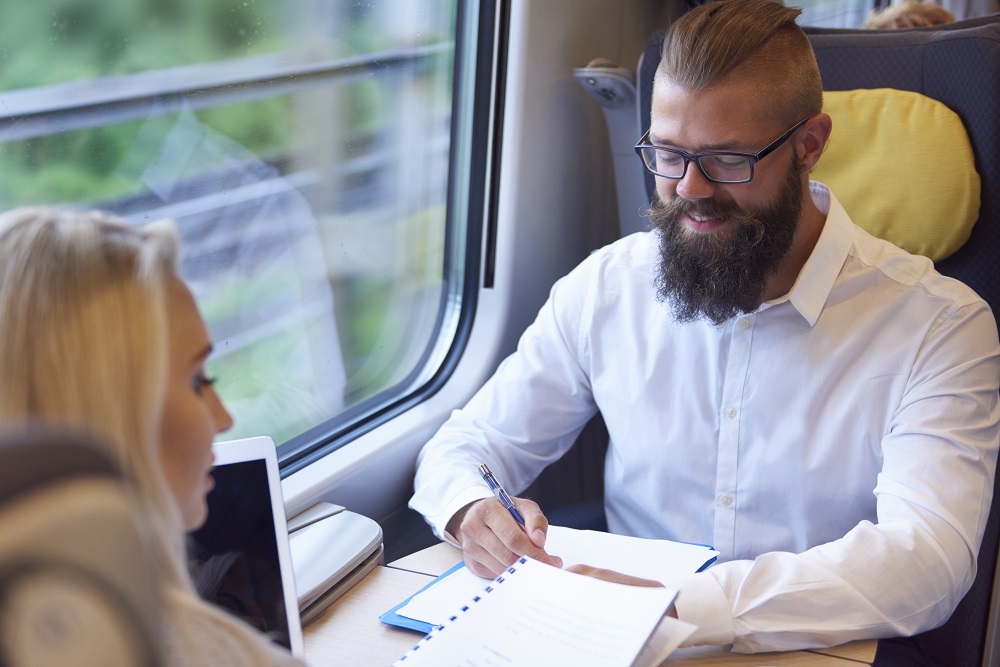
If you’re booking more long-distance trains, you can usually book a seat for free. This is definitely a good idea as you can choose a quiet coach so that you can work more comfortably and easily or choose a seat that has a desk, Wi-Fi and power sockets so that you can stay tuned in and work from the train.
Upgrades
Upgrade to first class for added comfort, complementary drinks and quieter environments. This can be added on at the time of booking or at the station. WIth first class you can get access to a relaxing atmosphere or use the space to keep working from before continuing your journey.
Loyalty and discount options
Railcards like the Network Railcard can save up to ⅓ on fares whereas corporate travel programs can often include negotiated rates and perks. The railcard is available for people under 26, over 60, those who travel as a family, a couple or who have a registered disability. This gives you access to 34% off Anytime, Off-Peak and Advance fares. The good news is your don’t need to live in the UK or be a UK citizen to buy a railcard, anyone qualifying under the previously mentioned rules can apply.
Book in advance
To save money, book in advance, with tickets available up to 12 weeks ahead. Advance fares are the cheapest option for medium and long-distance journeys. The earlier you book, the cheaper the tickets (just like when booking an airline ticket).
First or standard class on a UK train?
Generally speaking, leisure travelers will select standard class whereas business people tend to travel by first class for comfort and the ability to easily work from the comfort of the train. If you book first-class on LNER, Avanti West Coast and East Midlands Trains you even get food included and drink service. While standard class has 2+2 seating arrangements across the car width, first-class has 1+2, meaning there’s more elbow room, leg room and tables which can be used to work from.
Why choose National Rail for business travel?
Choosing to travel by train on one of the National Rail routes a great idea for the following reasons:
- Boosts productivity, allowing you to work as you travel (normally dead time)
- More cost-effective than driving a car (think toll roads, high gas prices and wear and tear on the car, or perhaps the cost of renting a car).
- Reduced stress thanks to less overall travel time. Unlike catching a plane, you don’t have to be at the train station hours and hours ahead of time. Train stations are often in the city center making it easier and faster to get to than the airport.
Choosing to travel by car, can also be a good idea, but when traveling to big cities like London or Glasgow, traveling by car can be a hassle (think finding parking, paying for parking or having to deal with traffic jams).

Top routes for business travel in the UK
There are certain popular routes in the UK thanks to speed, frequency and convenience. Keep in mind that the majority of the most convenient routes use London as a hub.
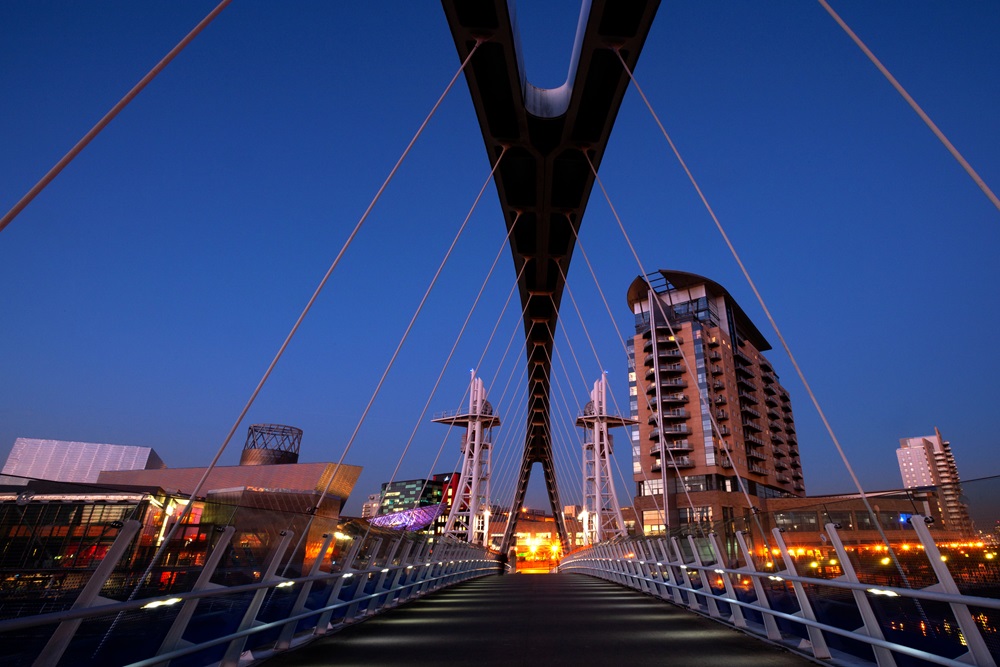
London – Manchester
- Average time: 2 hours and 7 minutes on direct trains
- Frequency: every 20-30 minutes during peak travel time
- Why this route? Manchester is a hub for finance, tech and media, making this an easy connection for day trips, meetings or conferences without having to spend the night
London – Birmingham
- Average time: 1 hour 20 minutes
- Frequency: Three trains per hour during peak times
- Why this route? Birmingham is a key business route for manufacturing and professional services.
London – Edinburgh
- Average time: Around 4 hours 20 minutes
- Frequency: Regular departures throughout the day
- Why this route? Edinburgh is a major financial and tech hub, and with onboard Wi-Fi, this journey from the city center to city center is more convenient than traveling from one of London’s many airports.
London – Newcastle
- Average time: 3 hours 19 minutes, fastest journeys can take 3 hours and 37 minutes
- Frequency: Very frequent, running every 27-33 minutes
- Why this route? This centrally located city, is popular for education, health and professional services, also mixing impressive architecture and a vibrant cultural scene.
The essentials of United Kingdom travel by train
Getting from one meeting to another or from one office to another in the UK can be easier thanks to traveling by National Rail. This way you can travel faster, more comfortably and more flexibly, while reducing your carbon footprint. Rail travel is the smart choice for professionals on the move so you can avoid long wait times and get to your destination faster and more efficiently.
Start planning your next business trip by train in the UK with GetGoing.